
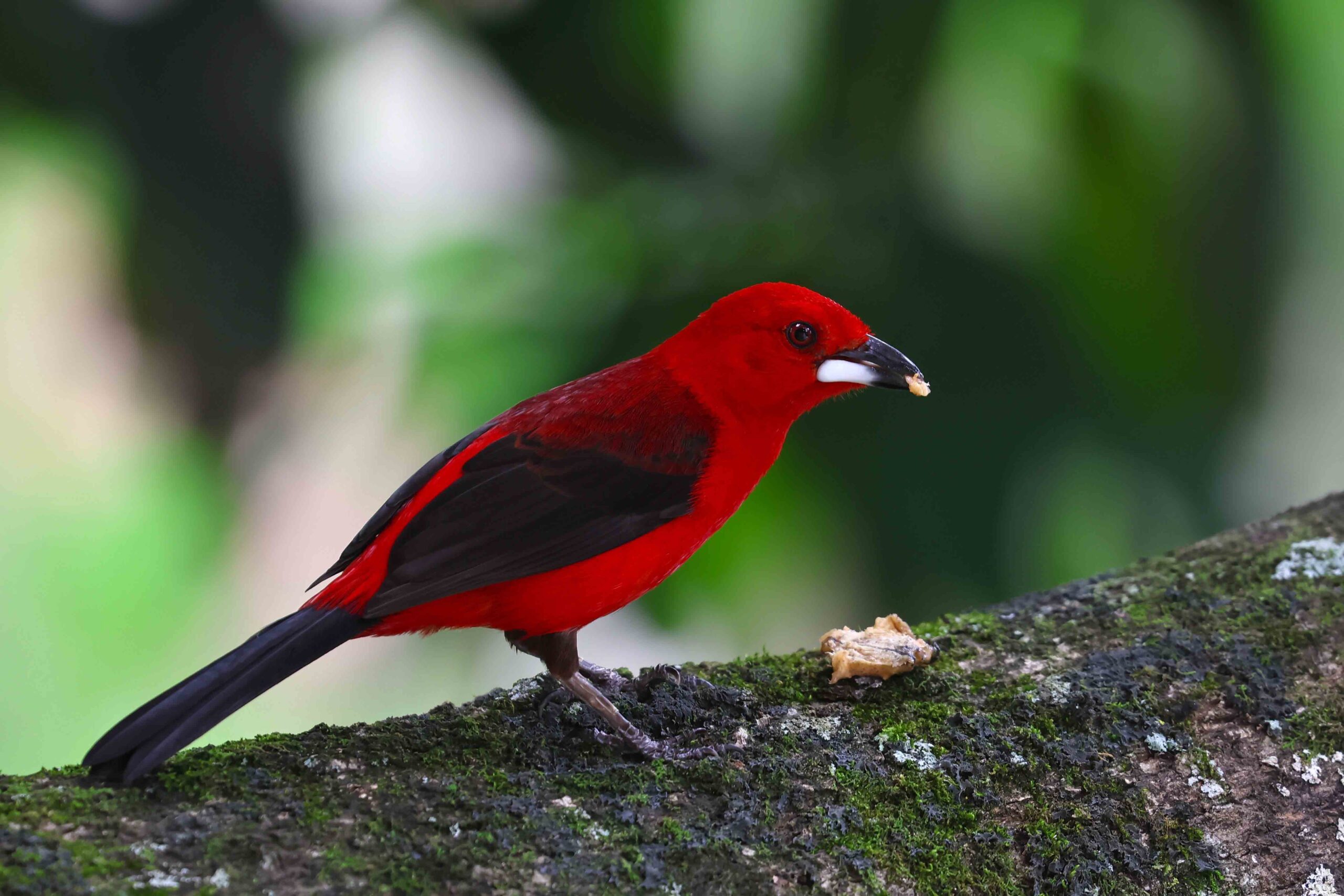
Photo: Fernando Moraes
Species and symbol of the Atlantic Forest and one of the most spectacular in the world, the Brazilian Tanager (Ramphocelus bresilia), also known as tingê, sangue-de-boi, tiê-fogo, chau-baeta, japiranga, and tapiranga, is a South American passerine bird from the Thraupidae family, recognized for the beauty of its red plumage. It measures between 18 and 19 centimeters in length and weighs between 27.9 and 35.5 grams. The male’s plumage is a bright red, which gave rise to the name. Parts of the wings and tail are black. The species exhibits sexual dimorphism, with the female having less vibrant plumage, brown on the upper parts and reddish-brown on the lower parts. The immature male is similar to the female in plumage, but the bill is entirely black and not brown. An important characteristic of the Ramphocelus genus, occurring exclusively in males, is the shiny white swelling at the base of the bill.